<aside>
<img src="/icons/video-camera_gray.svg" alt="/icons/video-camera_gray.svg" width="40px" /> A Surveillance System is an organized strategy or setup designed to observe and report activities in a given area
</aside>
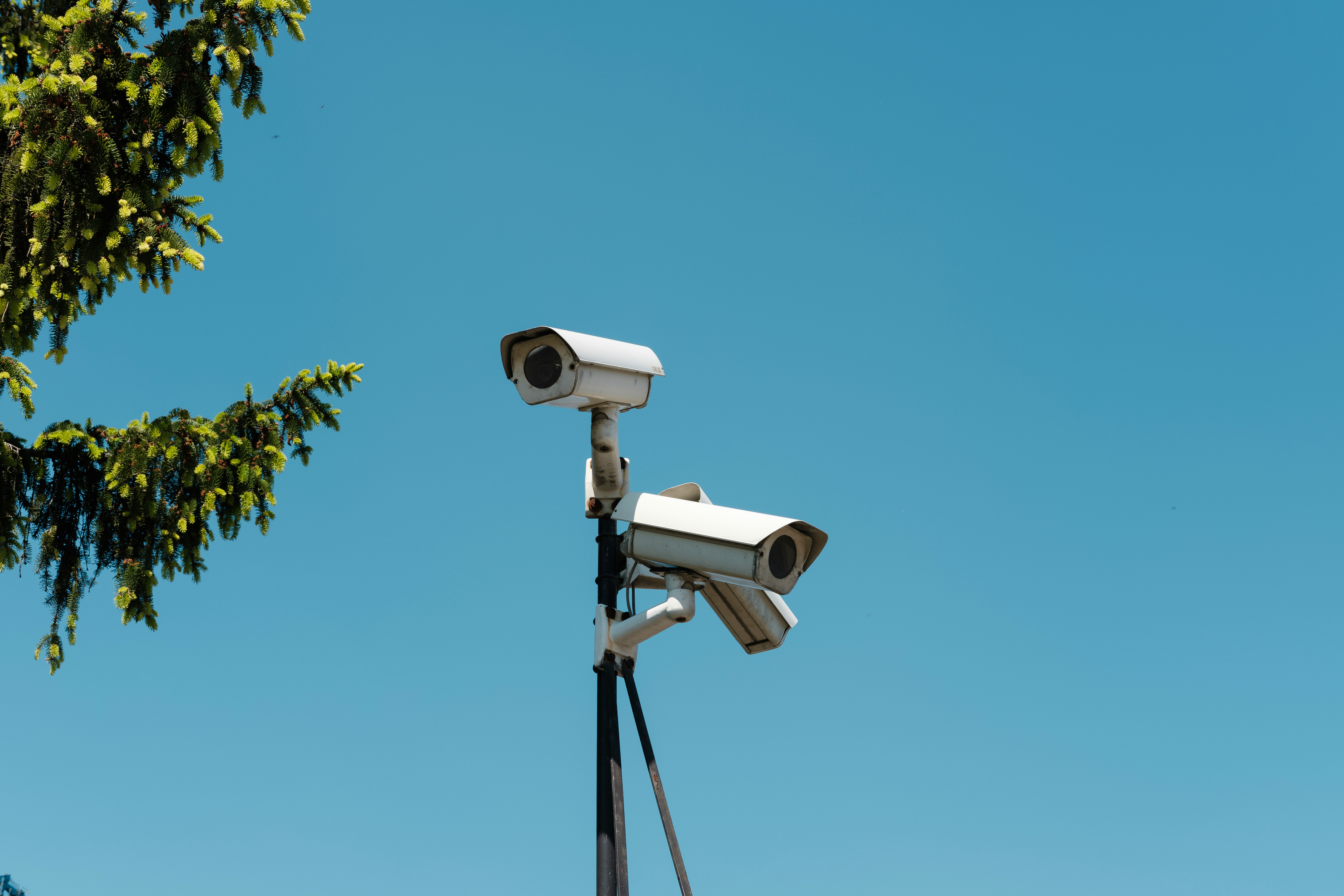
Surveillance is often comprised of four main categories
-
Video Surveillance
- Can include the following:
- Motion detection
- Night vision
- Facial recognition
- Remote access
- Provides real-time visual feedback
- A wired solution security camera is physically cabled from the device back to the central monitoring station
- A wireless solution often relies on Wi-Fi to send its signal back to the central monitoring station
- Pan-Tilt-Zoom (PTZ) System
- Can move the camera or its angle to better detect issues during an intrusion
- Best places to have cameras
- Data center
- Telecommunications closets
- Entrance or exit areas
- Cameras should be configured to record what they’re observing
-
Security Guards
- Flexible and adaptable forms of surveillance that organizations use
- Helps to reassure your staff or customers that they are safe
-
Lighting
- Proper lighting is crucial for conducting effective surveillance using both video and security guards
- If you create well-lit areas, this can deter criminals, reduce shadows and hiding spots, and enhance the quality of your video recordings
-
Sensors
- Devices that detect and respond to external stimuli or changes in the environment
There are four categories of sensors
- Infrared Sensors
- Detect changes in infrared radiation that is often emitted by warm bodies like humans or animals
- Pressure Sensors
- Activated whenever a specified minimum amount of weight is detected on the sensor that is embedded into the floor or a mat
- Microwave Sensors
- Detect movement in an area by emitting microwave pulses and measuring their reflection off of moving objects
- Ultrasonic Sensors
- Measures the reflection of ultrasonic waves off of moving objects